What Is Curved Structural Glass?
There is something quietly radical about a curve. It softens harsh lines, suggests movement and transforms a space into something unexpected. In architecture, the curve is still a rarity, a departure from the rigidity of the purely man-made, into something more organic and human.
Over the past decade, curved structural glass has become one of the most compelling materials through which architects and designers have begun to reimagine the spaces that we inhabit.
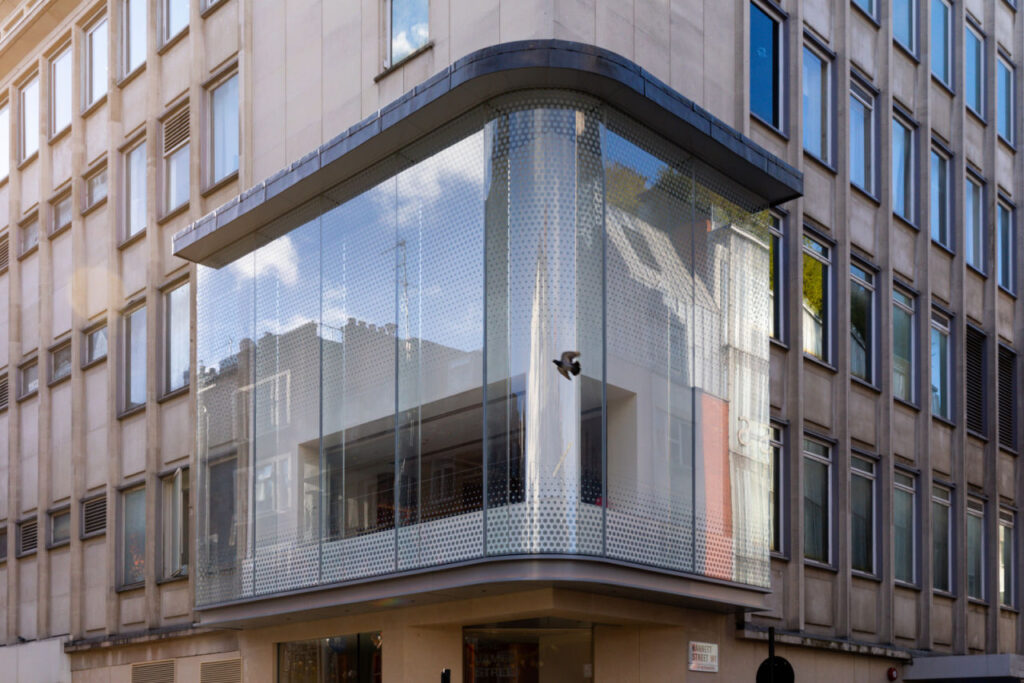
At Cantifix, the language of glass has always been about letting in light, increasing transparency and creating something new. Now, the vocabulary of glass is evolving past flat panes and right angles. Glass now bends and arcs, introducing flowing movement in the form of light into both modern and heritage structures. Curved glass windows and walls have become an artistic choice, but also a technical achievement, proving that the boundary between engineering and aesthetic choices can come together to achieve something more.
The evolution of curved structural glass
Traditionally, architectural glass was synonymous with clear lines and order. Panels were perfectly aligned, neatly sitting in linear lines, with functionality their primary role. The advent of curved structural glass, however, has redefined what we can expect from glazing.
This has opened a new vocabulary of design, one in which glass walls can ripple around corners, domes can rise in seamless transparency, curved rooflights can slide open at the touch of a button, and façades can undulate alongside the natural environment. The technology is as elegant as it is exacting: each pane is meticulously engineered, laminated, and toughened to ensure both structural integrity and optical clarity.
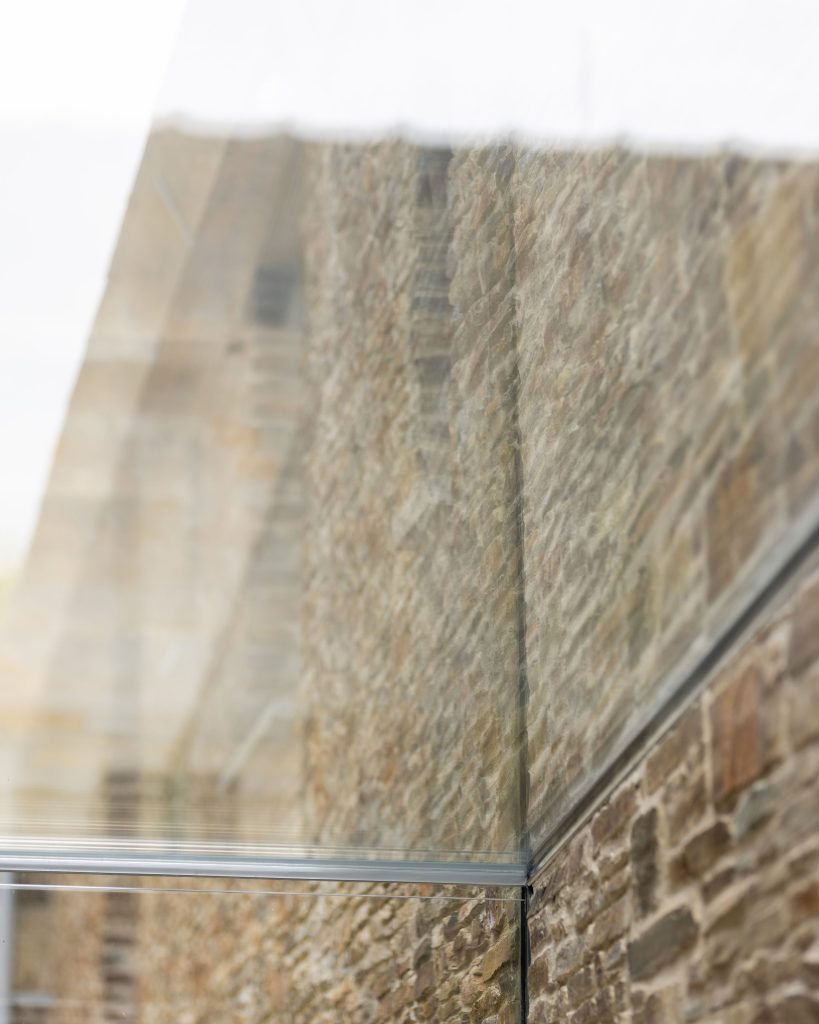
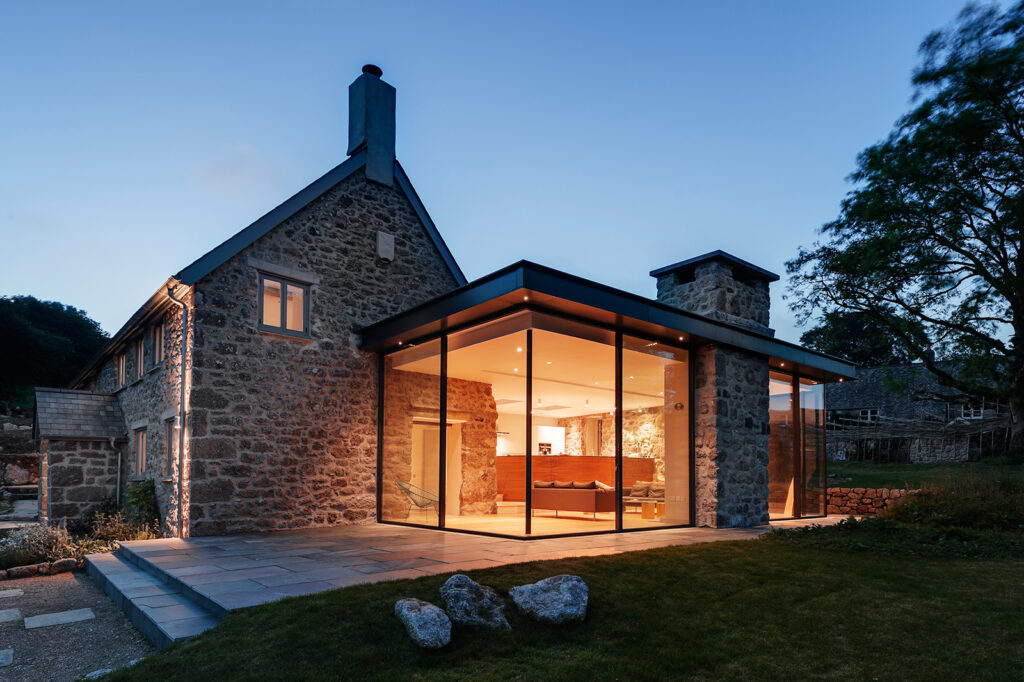
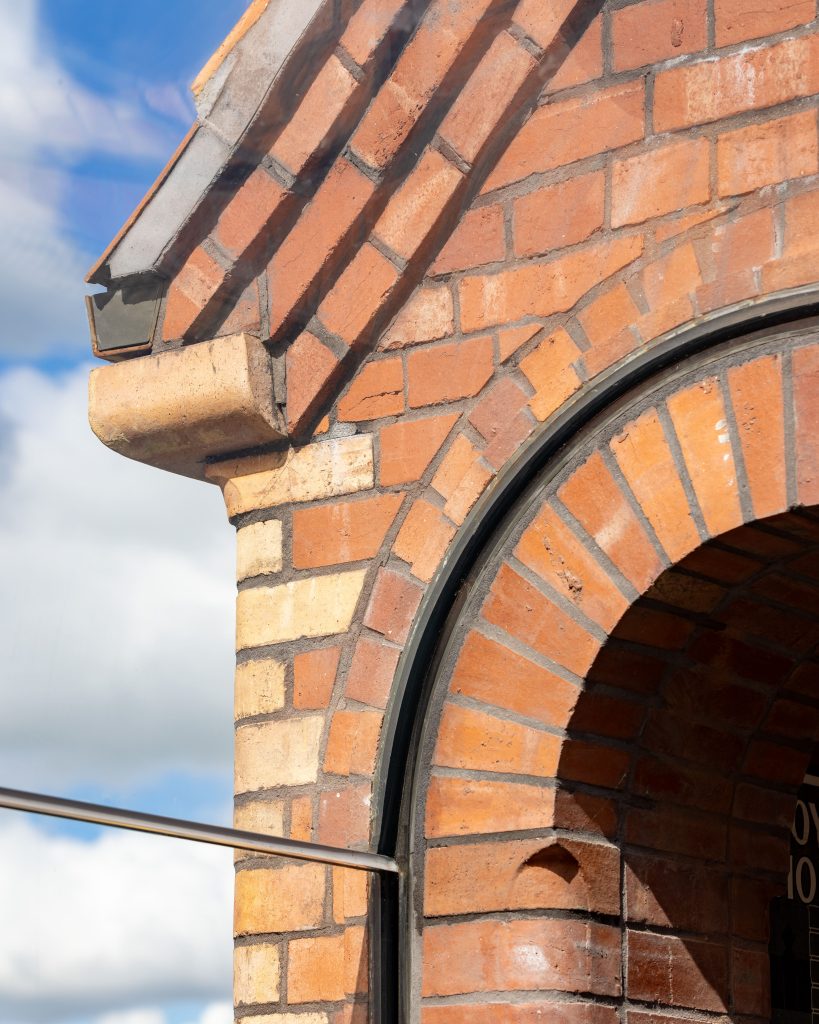
At The Creamery, for example, the use of structural curved glass – in the form of inner glass walls and a unique curved glass link between buildings- has created an environment that feels both sheltered and expansive at the same time. The glass sweeps gently without harsh corners, inviting spaces to merge, and the original 20th century buildings remain a key factor in the architecture. This is perhaps a key factor at the heart of curved structural glass: its ability to erase the barrier between what is built and what is seen.

A new language of light
The most striking quality of curved glass is its ability to choreograph light. Unlike flat glazing, which transmiles illumination in predictable patterns, a curve catches the light and refracts it. It can soften harsh daylight, elongate reflections, or create subtle gradations of brightness that move organically through a room.
For homeowners, architects and property developers alike, this dynamic relationship between light and material offers an aesthetic appeal, but an emotional resonance too. It transforms glass from a building material and mere surface to a medium that can tell a story as the day progresses.
Curved glass windows: elegance in motion
Among the curved glass technology on offer, is the Sky-Frame Arc. This is a system that exemplifies both precision and artistic design. It is engineered to deliver the ultimate in architectural freedom: a graceful curvature into sliding glass doors, while maintaining the same frameless minimalism that defines everything that Sky-Frame produces.
These curved glass windows and doors trace fluid, continuous arcs that introduce a sense of movement into a room. Whether made of double or triple glazing, each bespoke panel is carefully formed to a specific radium, designed and tested to work seamlessly. The result is a transition between structure and scenery, with the glass behaving almost like water in that it is transparent, strong and perpetually in motion.
Yet, what actually makes Sky-Frame Arc remarkable is its performance, which is not compromised for visual impact. The system can combine exceptional thermal insulation and optional solar-control coatings with the purity of curved structural glass, ensuring comfort and energy efficiency.
With curved glass, you are introducing soft contours to otherwise rigid lines, opening up a world of new geometries. Entrances can glide in gentle arcs; facades can embrace their surroundings instead of cutting through them; spiral staircases can feature a balustrade that moves with its shape – all of which are striking architectural alternatives to the conventional, expected squares, lines and grids of the past.
The future of architectural design?
To speak of curved glass windows is to speak of the future that is paradoxically firmly rooted in the ancient natural world. While design continues to move towards forms that celebrate sustainability, natural light, and human wellbeing, curved glass stands at the intersection of all three. Its structural properties allow for larger, uninterrupted spans of glazing which reduces the need for heavy framing (and a reliance on artificial light) and creates a sense of openness that aligns with modern living ideals.
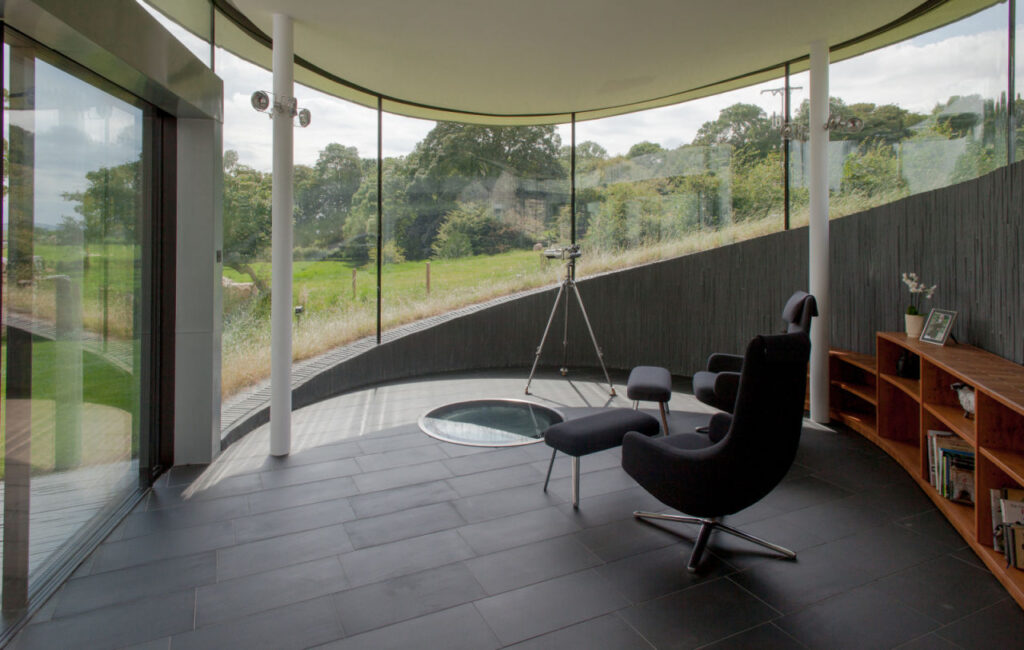
Architecturally, the possibilities with glass become almost sculptural. Glass facades can now wrap around a building, creating a dramatic visual that is also energy efficient and imbued with the latest glazing technology. In residential projects, curved glass windows and walls can transform ordinary corners into a panoramic viewpoint that blurs the boundary between the inner and outer worlds, or entire extensions can be made into circular rooms – a far cry from the boxy glass spaces we have come to expect from home extensions.
For Cantifix, these possibilities are not abstract ideas, but lived realities. All structural curved glass must integrate aesthetic appeal with precise engineering: it must perform as beautifully as it looks.
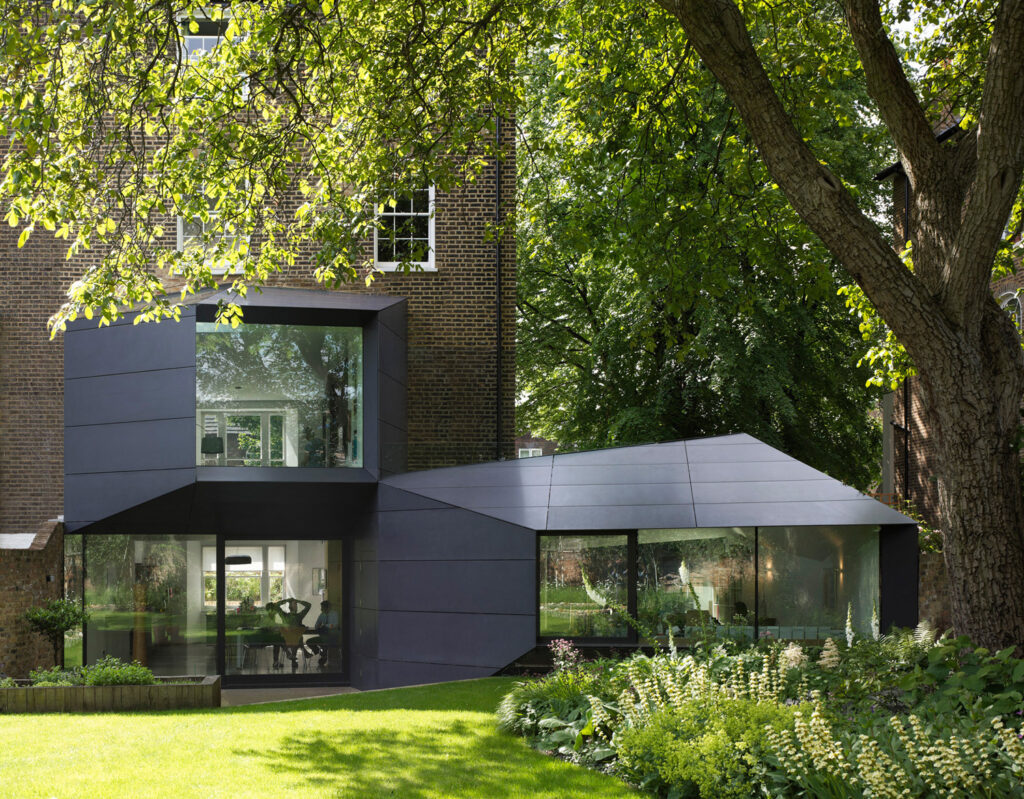
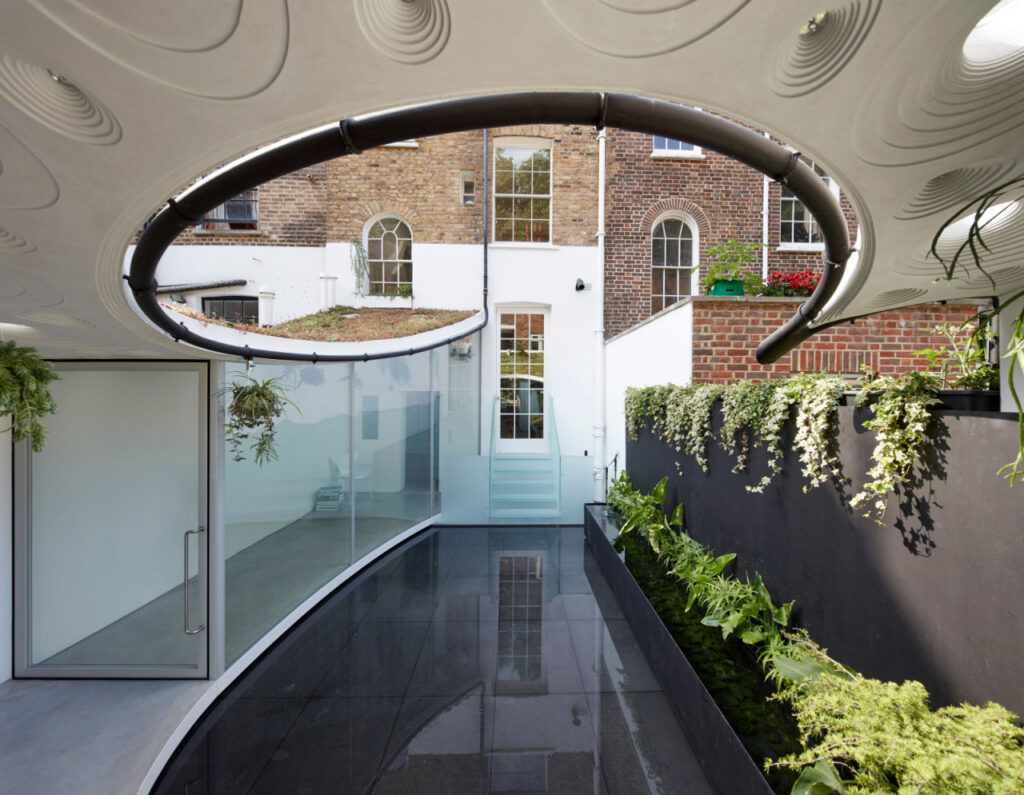
An example of this in action is the stunning Sun & Rain Rooms. Here the choice to use curved glass was anything but incidental. Constricted by tight spacing issues (this project sits behind a Georgian townhouse), meant that it required a solution that could reconcile daylight issues, geometry and the shifting English weather. The curved facade allowed the designers (who were both architects and owned the home themselves) to map the path of the sun. The eponymous rain part came from a tricking rain waterfall that landed in a shallow reflecting pool in the centre of the garden. By employing a frameless, low-iron curved glass wall, the curves of the roof and landscape were duplicated, and a connection to nature was established. The architects were after a softened boundary between nature and built environment, and the absence of corners or visible framework achieved this. Light now flows unimpeded, reflections are gentle and changeable with the weather. The result is an extension that is a piece of art in its own right, that looks almost like it has been caught in a moment of movement.
More than just the visual
Behind the effortless elegance of curved glass lies an immense amount of technical complexity. This is one of the reasons why curved glass is not in everyday usage. Each installation demands collaboration and coordination between designers, fabricators and engineers, ensuring that the final structure meets the exacting standards of both safety and performance. Tolerances must be measured in millimetres -with little to no give- and each radius, each joining and each lamination must align perfectly.
Cantifix’s expertise lies in navigating this complexity with precision and skill. Our engineers understand that the success of curved structural glass, in whatever form it takes, relies on craftsmanship as much as accuracy. The process, from digital modeling to installation, is one of patience, guided by decades of experience in glass innovation.


An invitation to reimagine the spaces we dwell in
Perhaps when you put aside the beauty of curved glass, and the technical craftsmanship, the greatest contribution it can officer, is that it can change how we feel within a space. Curves draw the eye and invite movement rather than static living. Where traditional glazing was used to delineate spaces, curved glass connects. It softens transitions like no other material, turning corners into continuations, and facades into welcoming undulating compositions/
For the new generation of architects who are seeking to reconcile the built environment with the natural world by way of Biophilic Design, curved glass offers an extraordinary opportunity. It reflects back the landscape without severing us from it. It brings the sky indoors and suggests that architecture can mean shelter without being shut away and disconnected from what lays beyond its walls.
Architects and designers continue to turn to Cantifix to realise projects where glass is more than just a material; where it is required to become part of the architecture itself. If you’re exploring the potential of curved structural glass or want bespoke curved glass windows or doors for your next project, our team would love to help you bring those ideas to life.
If you’re exploring the potential of curved structural glass or want bespoke curved glass windows or doors for your next project, our team would love to help you bring those ideas to life.